
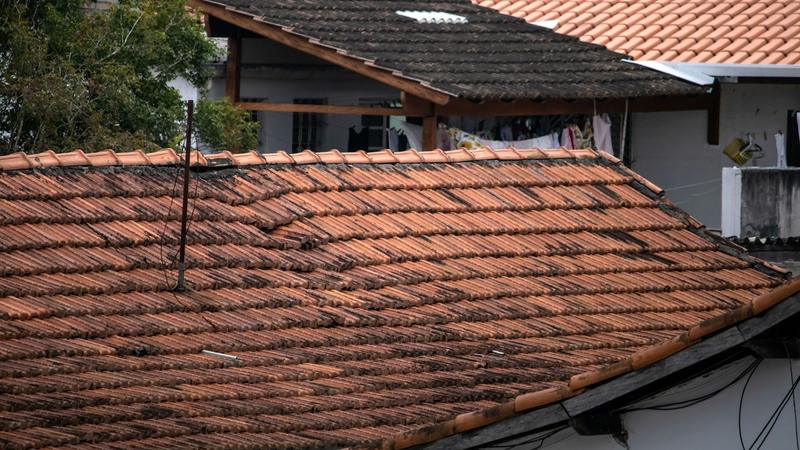
Roofs rarely fail overnight. Most give you plenty of warning, if you know what to look for. Here are the signs we'd look out for, and how to tell a repair job from a replacement.
1. You're paying for repairs every winter
One slipped tile is a repair. A new problem every time the wind picks up usually means the fixings, battens or felt underneath are giving up. Add up what you've spent over the last few years; it can be a surprise.
2. Tiles or slates are failing across the whole roof
Look for widespread cracking, flaking (spalling) clay tiles, or slates slipping in several places. On older slate roofs, lots of slipped slates is often nail fatigue: the original nails have rusted through.
3. The roof line is sagging
Stand back and look along the ridge and the slopes. A dip or wave can mean the timbers are overloaded, damp or damaged, which needs looking at properly.
4. Daylight or damp in the loft
On a dry day, go into the loft with a torch. Chinks of daylight, damp patches on timber, torn felt hanging down or black mould are all signs the roof isn't keeping the weather out.
5. The felt has perished
Older bitumen felt goes brittle and tears, especially near the eaves. Torn felt behind the gutters lets water rot the fascia and the rafter ends.
6. Heavy moss and blocked gutters
Moss on its own isn't a reason to replace a roof, but heavy growth on old porous tiles can be a sign they're absorbing water. See our moss guide.
7. Its age
There's no fixed lifespan, but if your roof is still on its original coverings from many decades ago and is showing several of the signs above, it's worth getting it looked at.
When a repair will do
If the tiles are generally sound and the problem is local, like a ridge, a valley or a flashing, a repair is almost always the sensible option. A good roofer should tell you that.
Next steps
Book a roof inspection for an honest view of your roof's condition, or try our roof cost calculator for a rough budget.